
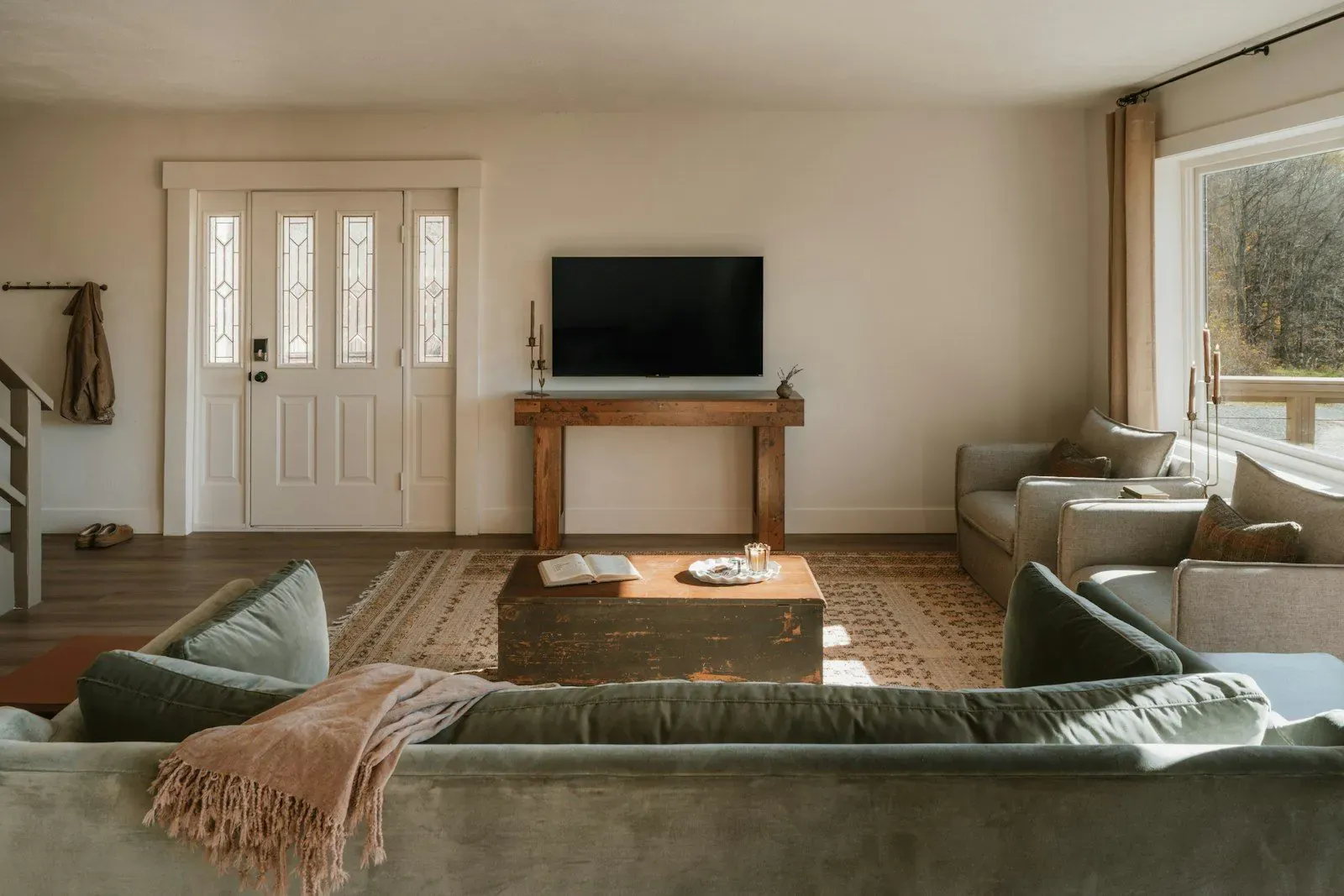
Start With How the Room Will Be Used
Before choosing a single piece of furniture, we ask how a family actually spends time in their living room. Is it for hosting guests, watching movies, or a quiet reading corner? The answer shapes everything from seating layout to storage.
That answer changes the plan more than any style preference. A room built around film nights wants different seating, sightlines, and lighting than one built around hosting a dozen guests.
A living room that fits your evenings will always beat one that only photographs well.
Furniture That Fits the Space, Not Just the Trend
Oversized sofas can overwhelm a small room just as much as undersized pieces can leave a large room feeling empty. We measure first, then select furniture that leaves comfortable circulation space and a natural flow between zones.
We plan circulation before we plan pieces. Leaving roughly ninety centimetres of walking space around the main seating is what keeps a full room from feeling cramped.
Layered Lighting Sets the Mood
A single ceiling light rarely does a living room justice. Combining ambient, task, and accent lighting, floor lamps, picture lights, dimmable overheads, lets the same room feel bright for daytime and cozy in the evening.
The switching matters as much as the fittings. Grouping the layers so one press gives you a bright room and another gives you a quiet one is what makes people actually use them.
- Ambient light for the overall level of the room
- Task light for reading corners and side tables
- Accent light to lift art and texture
- Dimmers so one room can serve day and night
A Palette That Ties It Together
Warm neutrals, natural textures, and one or two accent colors repeated through cushions, rugs, and art give a living room a sense of calm and cohesion, without feeling flat or overly styled.
A simple rule keeps it coherent: pick one dominant tone, one supporting tone, and one accent, then repeat each of them at least twice around the room.
Warm Neutrals as a Base
A warm off-white or soft greige gives artwork, timber, and greenery something to sit against without competing with any of them.
Where the Accent Belongs
Keep the accent to things you can change cheaply, like cushions and a rug. It lets the room shift with the seasons without repainting.